Bad odor in the flat shower tray is a common problem that can be uncomfortable for users and challenging for installers. Identifying the root cause is essential for an effective solution. Below, we explore the main reasons why bad odor occurs.
?️ Post Highlights: Solution to Bad Odor in Shower Trays
1. Causes of bad odor in shower trays beyond hair or soap: Discover what other factors might be causing those unpleasant odors.
2. How to eliminate bad odor in a shower tray: Learn the best practices for cleaning, inspection, and prevention of bad odors.
3. The key lies in the slope of the shower tray: The correct slope is essential to avoid water pooling and bad odors.
4. Types of valves: Find out which valve is the best choice to ensure proper drainage and prevent odors.
5. Best practices to prevent bad odor: Recommendations to avoid future drainage problems.
Main Causes of Bad Odor in the Shower Tray
1. Residue buildup in the valve or siphon trap
- Hair, soap, lime, and biofilm can accumulate in the valve or siphon trap.
- This buildup can cause partial blockages that affect the efficient drainage of water, leading to the decomposition of organic matter and bad odors.
2. Dry siphon due to lack of use
- When the siphon is not used frequently, the water inside evaporates.
- This breaks the siphon’s seal, allowing sewer gases to enter and create unpleasant odors.
? Featured Quote
“The U‑traps (in the bathrooms) must contain water (to operate correctly)… the dry U‑traps allowed sewer gases to escape into the bathrooms through floor drains.”
— Klaus Reichardt, “The Forgotten Part of Restroom Care… Drains”
3. Poorly sealed joints in the shower tray
- A poor seal between the shower tray and the wall can allow water leaks.
- Moisture promotes the growth of bacteria and fungi, creating bad odors that are perceived as a bad odor in the shower tray.
4. Drainage installation problems
- Errors such as double siphoning, mislocated valves, pipes without the proper slope, or poorly connected siphon traps affect water drainage.
- These installation errors can lead to residual water accumulation, which causes bad odors.
If there is bad odor, when dealing with a new shower tray, these installation problems may be the main cause.

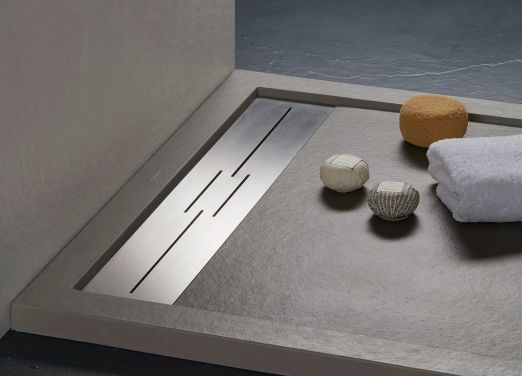
Epoque shower panel
How to Eliminate Bad Odor in a Flat Shower Tray Step by Step
Eliminating bad odor from a flat shower tray requires a methodical approach. Here’s how to proceed:
1. Drain Cleaning
For effective cleaning, you can use homemade methods like baking soda and vinegar. If the pipes are made of PVC, it's important to avoid corrosive products. Professional cleaning options, such as gel disinfectants, are also effective.
2. Siphon Trap Cleaning
Remove the siphon cover, take out the siphon, and remove accumulated residues. This maintenance should be done regularly, especially in installations with flat shower trays, where buildup can be more noticeable.
3. Sealing Check for Joints
Visually check the silicone joints between the shower tray and the walls. Use high-quality silicone to ensure a perfect seal. In ultra-flat shower trays, it is essential to perform a sealing protocol to ensure watertightness.
4. Preventing Dry Siphon
If the shower is not used regularly, add water to the siphon to prevent evaporation. This is a simple solution to prevent odors caused by evaporation in rarely used showers.
Checking a Correctly Levelled Slope of the Shower Tray
An incorrect slope can be the cause of slow drainage or water returning, which generates bad odors. If the shower tray base does not have the correct slope, it can be corrected without needing to redo the entire installation.
? Featured Quote
“A properly sloped shower base is far more than just a minor detail… Without the right slope, water can pool in corners or along the edges of your shower, creating a breeding ground for bacteria and mold.”
— “Shower Base Slope: Rules”, ABC Home Ltd., October 2024. ABC Home Ltd
Using Leveling Wedges or Adjustable Supports
Leveling wedges allow you to slightly lift the tray without compromising its stability.
Checking the Minimum Angle (2%)
To verify that the slope is correct, tools like a bubble level, laser, or tilt apps can be used.
Alternatives If the Base Cannot Be Modified
If it’s not possible to modify the base, higher flow valves or specific drainage solutions can be installed in complicated renovations.
Best Practices for Installers: Preventing Unnecessary Calls
As an installer, it's important to communicate the best practices to your clients to avoid future odor problems.
- Provide maintenance instructions for the siphon.
- Advise on cleaning frequency.
- Inform about products that should not be used in the drainage.
- Indicate when it’s necessary to consult a technician.
Kei Vulcano Shower Tray
Frequently Asked Questions About Bad Odor in Shower Trays
Why does the drain smell if the bathroom is new?
The bad odor could be due to construction residues in the pipes or a dry siphon.
Can a valve be installed without a siphon trap?
It is not recommended, as the siphon trap is essential to create a water barrier that prevents sewer odors from entering.
How can I tell if the bad odor is coming from the siphon or the pipes?
If the bad odor intensifies when the shower hasn't been used for a while, it's likely that the siphon is dry or dirty. If the odor persists even with the siphon in good condition, the problem may lie in the pipes.
What happens if the pipe's slope is insufficient?
An incorrect slope can cause slow water drainage, promoting the accumulation of residues and generating bad odors.
How often should the siphon be cleaned?
It is recommended to clean the siphon every 6 months, or more often if odors or blockages are detected.

Nova Stone Cover Shower Tray