The decade in which we find ourselves is a journey of transition towards business models and ways of producing, integrating environmental and social components in strategic decisions and throughout the value chain. At mcbath we see this time of change as an excellent opportunity to improve our internal processes and seek to create a positive impact on society's global challenges.
The manufacturing industry of which we are a part is waste intensive. We are aware of this and the fact that effective separation of such waste is key to the sustainability of the planet. Faced with this reality, we work hard to achieve the cleanest and most environmentally friendly production possible.
We have been improving our processes to make them more sustainable, more human.
How do we do this? With various actions, including waste recovery. In doing this, we ensure that:
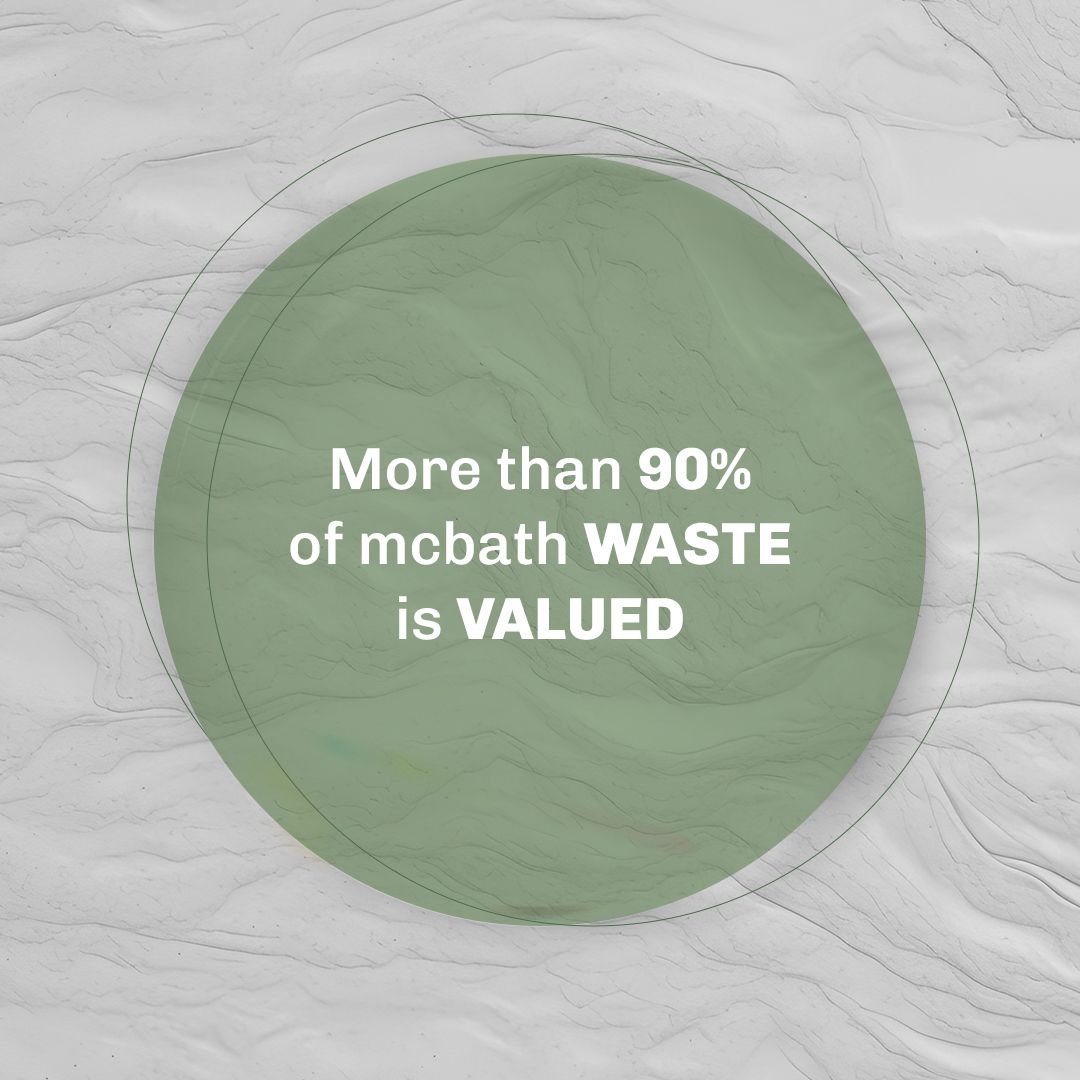
More than 90% of mcbath WASTE is RECOVERABLE
We improve our separate waste collection every year. In fact, our target for 2030 is to increase the amount of recovered industrial waste to 95%.
Another Tomorrow is our guiding principle: “The future is everywhere. It is here today and on our way to tomorrow. In every process, in every matter, in every action. Because the decisions we make today will be the reason for what happens tomorrow.
Today we would like to share with you why we believe in this philosophy by answering some of the most frequently asked questions about waste recovery.
FAQs on waste recovery
What is waste recovery?
Recovering waste means optimising its properties through reuse, recovery and recycling processes. It also refers to a process, an operation whose objective is to give the waste a second life. For example, the substitution of other materials to perform a function.
What is the difference between recycling and waste recovery?
It is essential to understand the difference between recycling and waste recovery. While recycling involves the transformation of discarded materials into new products, recovery goes further, seeking to optimise the properties of waste in order to give it a new use, thus minimising its environmental impact.
Why is proper waste recovery necessary?
The environmental risk of inadequate waste management is an undeniable reality. The accumulation of untreated waste pollutes the air, soil and water, endangering the health of ecosystems and people. This is why the correct recovery of waste becomes imperative to mitigate this risk and protect our environment.
What are the benefits of waste recovery?
Waste recovery offers a multitude of benefits for both the environment and society as a whole. From reducing pollution and conserving natural resources to generating employment and boosting the circular economy. This practice contributes significantly to building a more sustainable and resilient future.
A final thought:
Waste recovery represents an invaluable opportunity to transform our environmental challenges into innovative and sustainable solutions. By adopting practices that optimise waste management, we not only protect the planet, but also promote a development model that favours harmony between people and their environment.
It is time to lead the way in environmental responsibility. Today is the time to keep moving towards a cleaner future.
Leading the Way, Leading the Future