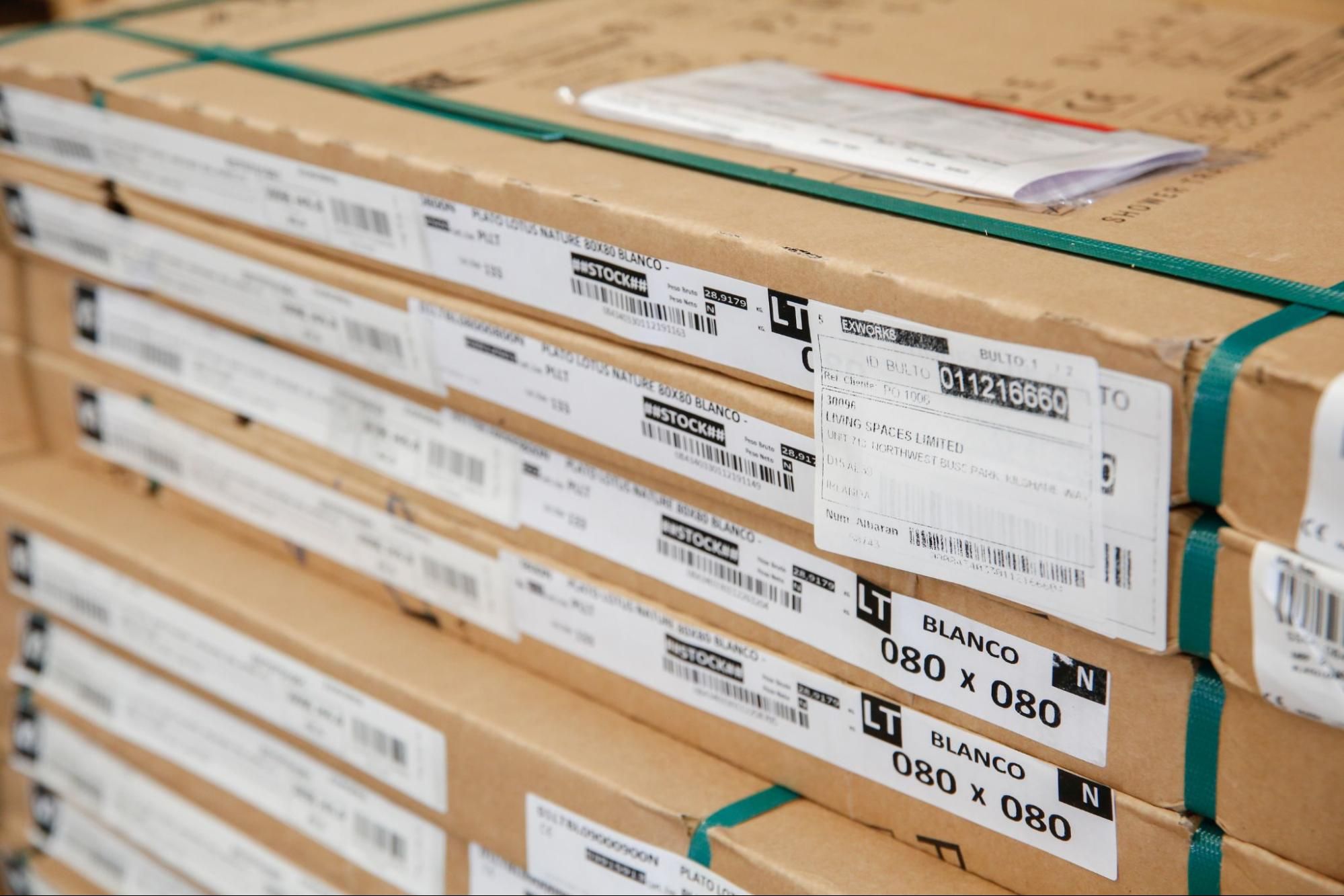
When a shower tray arrives at a construction site, it is not always installed on the same day. It may remain waiting for several days, while other works progress, the bathroom is being prepared or the different professionals coordinate their interventions. It is precisely during this period that it is essential to store it correctly.
Storing a shower tray without taking the proper precautions, placing it on an uneven surface or using it as a support for other materials can compromise its condition even before installation begins. Taking a few minutes to prepare a suitable storage area can therefore help prevent many problems later on.
In this guide, we review the points to check from the moment the shower tray is received until installation, as well as the precautions to take to keep it protected throughout the entire construction process.
Why can a shower tray become deformed before installation?
A shower tray is designed to function correctly once installed on a suitable base and according to the manufacturer’s instructions. Before this stage, however, incorrect storage can expose it to supports or stresses for which it was not designed.
One of the most common mistakes is leaving it for a long period of time in an unsuitable position or on a surface that does not support the entire shower tray evenly. This is why it is recommended to store shower trays flat. It is also important to follow the instructions provided in the technical data sheet or on the packaging.
When you need to store a shower tray on a construction site, avoid improvising. It is not enough to find a place where it will not get in the way: you must ensure that the product remains correctly supported and protected until the day of installation.
In addition to the quality of the support surface, other construction site risks must also be taken into account: accidental impacts, tools, material residues, repeated movement of different professionals or loads placed on the shower tray.
What should you check when the shower tray arrives on site?
The first inspection should be carried out as soon as the shower tray is received, not several days later. Before storing it, check that the product received corresponds to the correct model, dimensions, finish and requested specifications. Also make sure that the packaging does not show significant damage and that the surface and edges of the shower tray are in good condition.
This preliminary check is particularly important because it allows any possible issue to be detected before handling or installing the product. If you notice a problem, it is best not to continue with the installation until the cause has been identified.
Another important point: keep the technical documentation and protective packaging for as long as necessary. They may be useful during handling and help keep the shower tray properly protected until installation.
How to prepare a safe storage area?
On a construction site, there are many areas where people move around and very few spaces remain completely clear for long periods. It is therefore preferable to decide in advance where the shower tray will be stored.
Choose an indoor, dry, stable area away from usual foot traffic, tools and materials. The shower tray should be stored indoors and flat. It is also recommended to avoid areas where plaster residues, mortar, tiles or tools used during the works could fall.
Before placing the shower tray:
- Clear the area completely.
- Remove screws, stones and other construction residues.
- Check that the floor or support surface is even.
- Make sure the shower tray will not need to be moved constantly to access other materials.
The fewer times you need to move the shower tray before installation, the lower the risk of accidental impacts or damage.
Correct position and support surface
The most important rule when storing a shower tray is simple: you must follow the manufacturer’s specific instructions and avoid supports that could create unnecessary stress on the product.
Do not place the shower tray against a wall simply to save space, unless the specific product instructions expressly indicate that this is possible.
Flat, stable and clean surface
The surface where the shower tray rests must provide stable and even support. Avoid floors with rubble, adhesive residues, tools, uneven areas or small elements that could create localised pressure points.
The same principle applies later during installation: work on a flat and level base to ensure correct support for the shower tray. Before storing it, visually inspect the entire area and remove any element that could become trapped underneath the product.
Avoid weights and loads on the shower tray
A stored shower tray is neither a workbench nor a surface on which to place boxes. During a renovation, it may be tempting to use its large flat surface to place tiles, bags, tools or other materials. It is better to avoid doing so.
Make sure that the shower tray remains completely free from any loads during storage. This will reduce the risk of applying localised pressure, damaging the surface or accidentally deteriorating one of its edges.
How to protect the shower tray during construction works?
The risk does not disappear once the shower tray is removed from its storage area. During the works, it may still be exposed to impacts, scratches and material residues. Therefore, it is important to keep its protective elements in place for as long as possible.
In the case of our mcbath shower trays, the shower tray must remain covered with its protective cardboard until the bathroom works are completed. The protection must be effective, but also clean. If small hard particles get between the protective cardboard and the shower tray, and the protection later moves, they may scratch the surface.
Our goal is simple: for the shower tray to reach the installation stage in exactly the same condition as when it arrived on site.
Handling and moving on site
It is sometimes unavoidable to move the shower tray several times before installation. In this case, it must be handled with particular care. Before lifting it, clear the route and prepare in advance the place where you are going to put it down. This avoids unnecessary movements and reduces the risk of impacts during transport.
Depending on the dimensions and weight of the shower tray, handling it may require several people. And when it needs to be placed in its final position, tilting it is one of the operations that requires the greatest control.
To make this operation easier, mcbath offers the Lifter, a tool designed to help installers lift, tilt and position the shower tray in a more comfortable and controlled way. It can support shower trays of up to 40 kg, making it particularly useful during installation: it reduces the effort required while improving control over the movement of the shower tray.
Throughout the entire handling process, pay special attention to corners and edges and avoid any impact on the surface. Above all: never drag the shower tray directly across the floor. In addition to damaging the product, contact with construction residues or small particles on the floor may cause marks or surface damage.
Planning each movement carefully and using the right tools allows for easier, safer and more controlled handling.
Checks before starting installation
After several days of storage on site, it is recommended to carry out a final inspection before permanently installing the shower tray. Carefully remove the protection and check the surface, edges and drainage area again. Also verify that the dimensions of the shower tray exactly match the planned installation space.
If you notice any issue, do not try to solve it by improvising during installation. Consult the product instructions or contact technical support before continuing.
Once the shower tray has been checked, also inspect the area where it will be installed. A correct installation requires a base prepared according to the manufacturer’s specifications.
This is also the right time to check:
- The location and compatibility of the drainage system.
- The final dimensions of the available space.
- The condition of the support surface.
- Levelling.
- The absence of construction residues.
- The documentation and specific instructions for the model.
Do not assume that nothing has changed since the measurements were taken. During a renovation, different trades may intervene and slight variations can appear as the work progresses.